


Hi, I’m Panayotis Yannakas
your
Lawyer.
Litigator.
Business Consultant.
Attorney.
With a total of 5 years of professional experience navigating the Cyprus legal regime, I am a licensed Litigation Lawyer with comprehensive experience managing complex court cases, providing expert legal advice, and drafting contracts and legal documents. At my office, I am dedicated to providing personalized solutions that are tailored to your unique needs. My legal expertise has been strengthened by working on the legal research team of Cyprus Central Bank, and I have served as a trusted legal counsel for clients across various legal firms

Who I am
Business-minded litigation lawyer combining entrepreneurial insight with legal precision. From co-founding a digital marketing firm to navigating complex cross-border disputes, I bring a unique perspective that transcends traditional legal frameworks.
The Journey
From entrepreneurship to legal practice; a path that shaped my approach to solving business problems through law
Digital Marketing Firm Co-Founder
Co-founded Fresset Ltd, a boutique digital marketing firm. Led accounting, business operations, and strategic partnerships. Navigated complex cross-border outsourcing and tax compliance from the CFO seat.
Legal Education & Research
European University Cyprus Law School. Published works on international tax law and market distortion. Legal researcher at Central Bank Cyprus.
Cyprus Bar Admission
Called to the Cyprus Bar Association. Began handling complex litigation across criminal, civil, and administrative law.
Independent Practice
Launched Law Office of Panayotis Yannakas. Focused on litigation, corporate services, and tech-enabled legal solutions.
Core Strengths
What sets me apart — a unique blend of business acumen, technical proficiency, and legal expertise
Cross-Border Complexity
Navigating the intersection of Cyprus and EU law with practical experience in international disputes.
- International tax law & double tax treaties
- EU Directive 2001/23/EC (employee transfers)
- Acta Jure Imperii principle (embassy disputes)
- Cross-border VAT implications
- Madrid Protocol trademark protection
Tech-Enabled Practice
Leveraging technology to solve legal problems — from digital forensics to platform compliance.
- Digital forensics
- Platform compliance (RED, DAC7, GDPR, etc)
- Automated workflows & CRM systems
- GDPR reporting for noyb (Max Schrems’ NPO)
- Web development & linguistic algorithms
Entrepreneurial Mindset
Understanding business pain points from lived experience; not just legal textbooks.
- Nearly 6 years of hands-on entrepreneurial experience
- Handled accounting, payroll systems, outsourcing
- Navigated tax audits & globalization challenges
- Operations manager for business workshops
- Strategic counsel for startups & SMEs
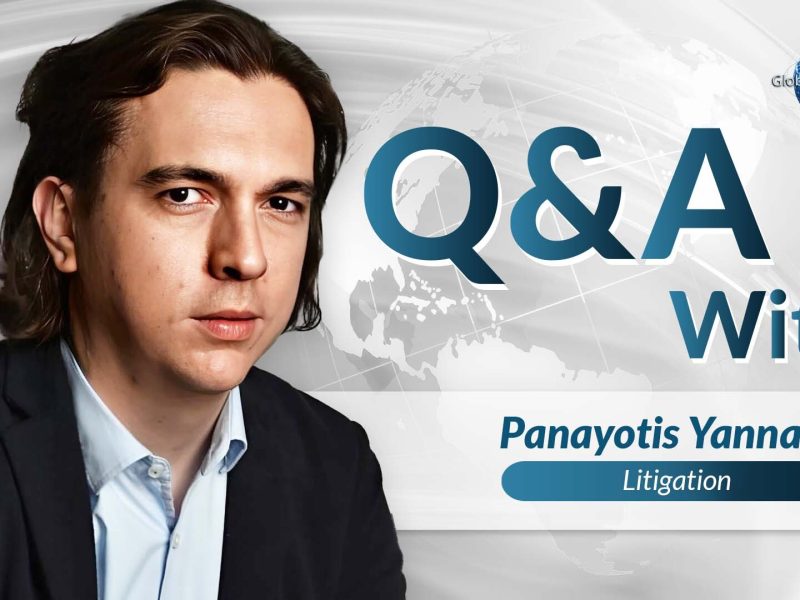
In Conversation — Litigation in Cyprus
An interview with Global Law Experts covering my practice philosophy, notable cases, and why cross-border collaboration matters.
Deep Dive Into My Practice
Notable Court Cases
Protecting Fundamental Human Rights in a Civil Lawsuit
2023 - On goingIn this case, my client was a European citizen who came to Cyprus to work as a barwoman. Instead of the promised employment, she was forced into prostitution by the bar owner, who had taken her passport and held it against her will. After the criminal court case against the owner concluded successfully, my client hired me to seek damages for the trauma and harm she had suffered. As a tort case, this presented an opportunity to assert fundamental human rights in the context of district court proceedings.
Defence of Immigrant Falsely Accused of Smuggling and Human Trafficking
2023 - On goingIn this on going case, my client was an immigrant who had travelled to Cyprus by boat with 25 other individuals. During the journey, a ship approached them, and the smugglers on board abandoned them in the middle of the sea. In an attempt to save himself and the others, my client decided to take control of the boat and navigate towards the shore. However, when they reached the harbor, the police arrested my client, accusing him of being a smuggler and human trafficker.
A criminal case of obstruction of official duties during pandemic measures
2023My client was charged with obstructing an policeman in the performance of his duties during the implementation of public health measures. The dispute arose due to a difference in interpretation of the early measures, which resulted in a physical altercation. Despite the seriousness of the charge, I was able to mount a successful defence, highlighting the lack of criminal intent. Although I was only hired after the last hearing day, I was pleased to secure a favourable outcome for our client, with the court imposing a modest fine. This case underscores the importance of seeking legal counsel at an early stage and the value of effective representation in defending against criminal charges.
Termination of Foreign Embassy Employee and Acta Jure Imperii Exemption
2022-2023The case involved a foreign national who was employed at their home country's embassy in Cyprus. The employee's contract was terminated due to a conflict with higher-ranking colleagues. The challenge in this case was to establish that the conflict in question was exempt from the Acta Jure Imperii principle, which governs the diplomatic immunity of foreign officials. This was particularly difficult given that part of the damages sought by the employee were grounded in tort law (bullying for sexual orientation). The case required a careful consideration of the legal principles governing diplomatic immunity and the employment relationship, as well as the specific facts and circumstances of the conflict at issue.
Balancing Successful Surgery and Aesthetic Concerns
2021-2022The case involved a surgeon who performed a successful surgery to remove a malignant tumor from the plaintiff. However, after the surgery, the plaintiff claimed to have dissatisfaction with the aesthetic outcome and that the experienced obstructions in the movement of the affected area, as well as unsightly scarring. The plaintiff sued the surgeon for medical negligence, arguing that the surgery was not performed with reasonable care and skill. The case presented a delicate balance between the plaintiff's dissatisfaction with the aesthetic outcome of the surgery and the success of removing the tumor. During the trial, different medical opinions were presented regarding the best way to treat such cancer, further complicating the case. Ultimately, the court had to determine whether the surgeon had breached their duty of care to the plaintiff, resulting in the alleged injuries.
Amendments to the Bill of Indictment and the legality of cache files
2021-2022My client, a Syrian national who had fled his country due to the ongoing war, was facing criminal charges for allegedly participating in a Telegram group that was labeled as promoting ISIS. FBI had informed the local police about his participation, leading to his arrest and detention. As his defense attorney, I worked on amending the bill of indictment to more accurately reflect the charges against him. In addition, I raised a hearing within a hearing based on the argument that my client could not have been aware of the cache files that were found on his device, which were being used as evidence against him.
Procurement process of EAC and lot theory
Started at 2019The appeal was related to the implementation of the lots theory in an EAC tender competition of €1.1M. The initial call did not use the term 'lots theory,' and it was quite challenging to argue in the pleadings that this was a competition of tendering based on the lots concept, and that the EAC did not comply with EU requirements and soft law pertaining to such procurement processes
Dragging the foreign employer to our Home Court
Started at 2019There were two separate cases where two different clients had been forced to be transferred to shell companies and lose regulated employee benefits. It was a solid opportunity to understand & trigger the EU Council Directive 2001/23/EC (Acquired Rights Directive).
Notable Out-of-Court Cases
Securing Pension for Foreign Following Unilateral Termination of Employment
2023I was hired by a middle-aged foreign client who had recently experienced unilateral termination of his employment. Due to his foreign status, he had not met all the minimum requirements necessary to secure a pension from the Cyprus social insurance office. In order to help him, I had to navigate the bureaucracy of the Cyprus social insurance office and trigger the voluntary contribution scheme. Despite the challenges involved, I was successful in securing a pension for my client, providing him with financial security in his retirement. This case highlights the importance of understanding the legal and regulatory requirements of a country in which one works and the potential consequences of failing to meet these requirements.
Establishing a Limited Entity in Cyprus Buffer Zone
2022As part of my work, I was assigned to establish a limited entity with a registry office in the buffer zone of Cyprus. The process of ensuring AML compliance and completing the necessary paperwork proved to be a challenge, particularly given the residency status of some of the members who were Turkish Cypriots residing in North Cyprus. Despite these difficulties, I was able to successfully establish the limited entity in compliance with all necessary regulations.
Beneficial Ownership Reporting for a Portfolio of 30 Companies, NGOs, and NPOs
2021I was assigned with submitting the appropriate data of Beneficial Owners to the Cypriot Company Registrar for a portfolio of 30 companies, which included NGOs and NPOs, as well as for an association where the appropriate department was the District Administration Offices. This was necessary due to the recent amendment to national law, which required the submission of such data. Despite the volume of data involved and the lack of clarity in the board structure of some entities, I was able to work quickly and accurately to ensure compliance.
Abandoned Trademark Application and Patent Trolls
2019My client's trademark application had been pending for two years due to their own negligence. As their legal representative, I assessed the legal concerns and devised a strategy to revive the abandoned application. However, we faced a challenge from a patent troll company that had submitted a similar trademark to the EUIPO. I worked to fight against this company and through my efforts, we successfully revived the trademark application. In addition, I secured the internal appeal against the EUIPO for accepting the application of the patent troll. This case highlights the importance of proactive trademark management and the potential consequences of neglecting such matters.
FBME Bank Case: The Impact of Sanction Lists
2018A legal research during my tenure at the Central Bank of Cyprus (CBC), specifically in relation to the highly publicized court case involving FBME Ltd. As part of this research, I compiled a comprehensive timeline report that analyzed the legal arguments and decisions made in each phase of the revocation of the licensed bank FBME, which was a result of amendments to the US sanctions lists. This report provides valuable insights into how administrative law works in Cyprus and how international law and sanctions lists can impact national law
Education
Bar Exams
Cyprus Bar Association (2019)
Bachelor of Law (LL.B.)
European University Cyprus (2019)
Public & Private International Law
The Hague Academy of International Law
Statistical Thinking for Data Science and Analytics
ColumbiaX, an initiative of Columbia University (2016)
[ACCA] Law and Accountancy I
Greek Institute of Certified Public Accountants under the aegis of University of Athens (2015)
Bachelor of Science in Business Administration
Technological and Educational Institute of Western Greece (2015)
Contact With Me

Law Office of Panayotis Yannakas
37 Annis Komninis, 6th Office (2nd Floor), Nicosia, PC 1061, Cyprus
Phone: +357.22035352 Email: panayotis@yannakas.meMy Portfolio

General Lawyer: Why I Practice Law without a Specialty Label
Clients ask it reflexively: “What do you specialise in?” The question sounds like due diligence, but it rests on a false premise. It assumes that legal problems arrive wearing the correct jurisdictional badge and stay within their lane. They do not. They never have. Yet the legal market has spent decades encouraging this belief, rewarding lawyers who carve themselves into ever-narrower slices and market depth at the expense of breadth.
I am a Litigation and General Practice Lawyer in Cyprus, and I introduce myself as such deliberately. In a profession where “specialist lawyer” is a title anyone can claim and no institution will verify, the generalist who sees a legal matter whole offers something the narrow practitioner structurally cannot: peripheral vision.
The Unverified Label
A specialist physician earns a credential the state validates and the profession enforces. The”specialist lawyer“, in most jurisdictions and certainly in Cyprus, has simply decided to describe himself that way. The Cyprus Bar Association recognises no formal specialisation system. The ABA’s own rules protect the word certified; the title specialist remains open to anyone willing to print it on a business card.
Legal services are what economists call credence goods: quality is opaque before, during, and after the engagement. When clients cannot verify expertise, an unverified specialty title acquires persuasive force far beyond its informational content. The generalist who is transparent about his breadth offers something more honest: a clear picture of how he practises, rather than a label no regulator has endorsed.
The Blind Spots of Narrow Practice
Professor Moorhead’s research on cognitive narrowness found that specialist lawyers referred out-of-specialty problems at roughly half the rate of generalists and were more likely to tell a client that no course of action existed, even where the true limitation was the lawyer’s own focus rather than the merits. The specialist, in other words, does not always know what he is missing.
Real legal situations arrive in clusters. A redundancy becomes an employment claim, a tortious dispute, and, where the employer enjoys diplomatic status, a question of sovereign immunity. A commercial contract can conceal a fraudulent misrepresentation, an insolvency risk, and a criminal exposure. The generalist treats the legal landscape as a terrain: uneven, interconnected, and requiring constant peripheral vision.
Why Breadth Wins
David Epstein’s distinction between “kind” and “wicked” learning environments applies directly to law. Chess rewards repetition; litigation does not. The facts never repeat themselves exactly, and the intersections between regulatory regimes, contractual obligations, and human behaviour are never quite the same twice. Breadth of experience is itself the primary mechanism by which sound judgement is formed.
A study in Nature Computational Science examined over sixty thousand federal civil proceedings and found near-zero correlation between prestige rankings and actual litigation outcomes. Courts are staffed by generalists, and lawyers who have spent a career in a single regulatory corridor can find, at the moment of argument, that they are speaking fluently in the wrong language. The generalist speaks the court’s own language; the specialist often has to translate.


Digital Possession in Criminal Law
In December 2021, I defended a related case in the Larnaca District Court where the prosecution’s evidence hinged on thousands of images and videos found in browser cache files. The technical challenge was profound: proving that automatic app storage doesn’t constitute legal possession under Cyprus criminal law.
My client accessed content through Telegram groups and web browsers—ordinary internet usage that generated over 3,000 cached files without his knowledge or control. The prosecution argued these cached terrorism-related materials proved “possession” under Article 9 of the Counter-Terrorism Law. We demonstrated that cache files are ephemeral technical residues: created automatically, stored invisibly, and beyond user control. The case crystallized a fundamental question for the digital age: when machines store data autonomously, where does criminal liability begin?
The Legal Framework
Criminal possession requires both knowledge and control. The Cyprus Penal Code’s definition demands awareness that material exists and the ability to exercise dominion over it. Cache files fail both tests: users don’t know they exist, can’t access them without technical expertise, and have no control over their creation or deletion.
The Ninth Circuit’s landmark decision in United States v. Kuchinski established the principle that cached files without user knowledge cannot constitute possession. Cyprus courts have followed this reasoning, recognizing that viewing content online differs fundamentally from deliberately storing it. The distinction protects citizens from strict liability for their browsers’ automated processes.
Technical Realities
Browsers cache content to improve performance, not preserve evidence. Files appear and vanish according to algorithms users never see. The cache directory sits buried in system folders, inaccessible through normal navigation. Even finding these files requires specialized knowledge most users lack.
This automation matters legally. When prosecution conflates temporary technical storage with intentional possession, it criminalizes the act of browsing itself. Every click potentially becomes a crime if the wrong content gets cached. Such interpretation would make the internet legally unusable, turning standard web protocols into instruments of strict criminal liability.
Defending Digital Rights
Cache possession cases reveal how criminal law struggles with digital reality. The traditional mens rea framework—requiring both knowledge (Wissen) and will (Wollen)—remains essential for justice. Without it, automated processes become tripwires for prosecution, and technical ignorance becomes criminal negligence.
For defense counsel, the strategy is clear: distinguish deliberate downloading from passive caching, demonstrate the defendant’s lack of technical knowledge, and emphasize the absence of user control. Expert testimony on browser mechanics often proves decisive. Courts increasingly recognize that «possession» cannot extend to files users neither created, accessed, nor knew existed. This precedent protects not just individual defendants but the principle that criminal law requires human agency, not machine automation.


Paternity & DNA Testing in Cyprus Family Courts
When family relationships are disputed, scientific evidence becomes essential. Cyprus Family Courts have wielded genetic testing as a tool for establishing paternity since 2006, when Article 24A was introduced to the Children (Affiliation and Legal Status) Law. The legal framework balances the right to truth with fundamental privacy protections, creating a nuanced system where consent remains paramount but refusal carries legal consequences.
In the landmark case Mary Jane Supatan v. Nikola Peristianu (2006) 1 A.A.D. 1417, the Court of Appeal clarified that while courts can issue directions for blood sampling, they cannot compel compliance. What they can do is draw inferences from refusal. This distinction protects constitutional rights while recognizing that DNA evidence, when voluntarily provided, offers near-certainty in paternity disputes. The question is not whether genetic testing violates privacy, but how courts navigate the tension between establishing familial truth and preserving individual autonomy.
The Legal Framework
Article 24A of Law 187/91 grants Family Courts authority to issue directions for hematological, genetic or other appropriate examinations to determine biological paternity. The distinction between directions and orders is critical: the alleged father retains the right to refuse testing without facing contempt proceedings or forced compliance.
However, refusal is not without consequence. When a party declines testing after court directions, the tribunal may draw any inference that appears reasonable under the circumstances. As the Supreme Court held in subsequent appeals, refusal to submit to DNA testing, absent compelling justification, creates a strong inference of paternity when combined with other evidence. The framework protects both the child’s right to know their parentage and the alleged father’s bodily autonomy, resolving the tension through evidentiary inference rather than physical compulsion.
Privacy Rights and Consent
The intersection of genetic testing with privacy rights remains carefully guarded. Article 15 of the Cyprus Constitution and Article 8 of the European Convention on Human Rights protect private and family life from arbitrary interference. Medical procedures, including blood sampling, constitute interventions that require legal justification and individual consent.
Cyprus legislation respects these protections while recognizing that family law disputes involve competing rights: the mother’s right to establish paternity, the child’s right to know their biological parents, and the alleged father’s right to privacy and bodily integrity. The system resolves this through procedural safeguards: courts issue directions only when paternity is genuinely disputed, testing follows medical protocols that protect data confidentiality, and results are used strictly for the judicial proceedings at hand. This calibrated approach ensures that genetic evidence serves justice without becoming an instrument of invasive state power.
When DNA Testing Becomes Necessary
Paternity disputes typically arise in three contexts: mothers seeking child support from alleged fathers who deny parentage, fathers seeking custody or contact rights when mothers dispute biological connection, and inheritance cases where legitimacy determines estate distribution. In each scenario, genetic evidence can resolve factual disputes that would otherwise devolve into credibility contests with limited probative value.
Strategic timing matters. Requesting DNA testing early in proceedings demonstrates good faith and can accelerate resolution, particularly when the alleged father genuinely doubts paternity. Conversely, waiting until trial to raise testing objections may be interpreted as tactical delay rather than principled opposition. For mothers pursuing support claims, establishing biological paternity is typically the first step toward obtaining maintenance orders. For alleged fathers, voluntary testing that excludes paternity provides complete defense, while refusal to test when paternity is plausible creates evidentiary burdens that are difficult to overcome. The legal framework makes cooperation advantageous when one is confident in the biological facts, and makes refusal costly when doubt exists.


CPR 2023 & Mediation: A Critical Appraisal
Cyprus’ civil justice system stands at a crossroads. The 2023 Civil Procedure Rules represent the most radical transformation since independence, elevating mediation from peripheral option to central pillar of dispute resolution. What was once a system frozen in 1958 now embraces pre-action protocols, judicial case management, and structured alternative dispute resolution.
Yet this revolution brings profound tensions: Can mandatory mediation coexist with the right to access courts? How do we balance efficiency with justice, confidentiality with accountability, voluntary participation with institutional pressure? As Cyprus navigates between European directives and local legal culture, these reforms reshape not just procedure but the very philosophy of how disputes should be resolved.
The Procedural Revolution
The overriding objective transforms litigation from adversarial combat to managed resolution. Pre-action protocols now require parties to exchange information, narrow issues, and genuinely consider settlement before filing suit. Small claims under €10,000 follow simplified procedures, while judges wield unprecedented powers to direct cases toward mediation.
This isn’t merely administrative reform—it’s a cultural shift. Lawyers must now justify why they haven’t mediated. Courts can impose cost sanctions on unreasonable refusals. The message is clear: litigation is the last resort, not the first response. Yet implementation reveals friction between Anglo-Saxon efficiency models and Mediterranean legal traditions.
Ethics & Enforcement Dilemmas
Mediation’s promise of voluntary resolution meets complex ethical terrain. Private caucus sessions, while enabling frank discussion, raise questions about information asymmetry and mediator influence. The balance between absolute confidentiality and the need for transparency when settlements are challenged creates a fundamental tension in the process.
Cyprus’ proposed Article 15A, mandating initial mediation for disputes under €5,000, exemplifies the broader European debate. Drawing from precedents like Halsey and Alassini, courts must determine whether mandatory ADR represents proportionate reform or constitutes an unacceptable barrier to justice under Article 6 ECHR. The challenge lies in preserving mediation’s voluntary essence within increasingly institutionalized frameworks.
Navigating the New Landscape
The intersection of EU Directive 2008/52/EC, Cyprus Law 159(I)/2012, and the 2023 CPR creates a complex regulatory matrix. Mediation Settlement Agreements now achieve «super contract» status—enforceable as court orders through simplified Part 8 procedures. Yet this elevation brings scrutiny: How do we balance the sanctity of confidentiality against claims of duress? Can mandatory initial sessions under proposed reforms survive Article 6 ECHR challenges?
International dimensions add further complexity. While the Singapore Convention promises global enforceability for mediated settlements, Cyprus remains outside this framework. Meanwhile, English precedents from Halsey to Lomax shape local interpretation, as courts grapple with when refusal to mediate becomes unreasonable—and when compulsion violates fundamental rights. The path forward demands not blind adoption but thoughtful calibration between efficiency imperatives and justice principles.
Explore how the 2023 Civil Procedure Rules revolutionize Cyprus’ civil justice framework through the lens of mediation. This comprehensive analysis examines the “overriding objective” that now governs all litigation, dissects the three pre-action protocols that reshape lawyer-client dynamics, and evaluates how small claims procedures and cost sanctions create powerful incentives for settlement. Drawing from English precedents and early implementation experiences, the article assesses whether Cyprus is genuinely transitioning to a mediation-forward model or merely adding procedural layers. Essential reading for practitioners navigating the new rules, understanding enforcement mechanisms for Mediation Settlement Agreements, and anticipating how judges will exercise their expanded case management powers.
This comprehensive analysis examines the tension between mediation’s theoretical foundations and its practical implementation across European jurisdictions. The article explores the ethical dimensions of private caucus meetings, the enforceability challenges of Mediation Settlement Agreements when duress is alleged, and the evolving jurisprudence on mandatory ADR schemes. Through detailed examination of landmark cases including Halsey v Milton Keynes NHS Trust, Alassini v Telecom Italia, and recent English precedents, it evaluates whether mandatory mediation schemes comply with Article 6 ECHR guarantees of access to justice. The analysis covers Cyprus’ proposed Article 15A amendments requiring initial mediation sessions for disputes under €5,000, the implications of the Singapore Convention for international commercial settlements, and the elevated legal status of MSAs as «super contracts» under the new CPR framework. Essential for practitioners navigating the constitutional limits of compulsory ADR and understanding the proportionality principles that govern modern dispute resolution policy.


Setting Up a Limited Company in Cyprus
Considering setting up a company in Cyprus? As an experienced corporate lawyer, I’m here to guide you through every step of the process. From selecting a compliant company name to structuring your business, I’ll help you navigate Cyprus’s flexible capital requirements and shareholder options. With my expertise, you’ll discover how Cyprus’s business-friendly environment can benefit your venture, whether you’re a solo entrepreneur or part of a larger enterprise. Let me show you the streamlined path to establishing your EU presence in Cyprus, combining ease of setup with attractive operational benefits. Contact me today to start your journey towards a tax-efficient, EU-compliant business structure.
Cyprus has emerged as a prime destination for business establishment within the European Union, offering a unique blend of tax efficiency, EU compliance, and strategic geographical advantage. The process of setting up a company in Cyprus is designed to be straightforward and business-friendly, reflecting the country’s commitment to attracting international investment.
This guide will walk you through the key steps of forming a company in Cyprus, from choosing a company name to meeting annual compliance requirements. Whether you’re looking to incorporate a new company or purchase a shelf company for immediate operations, Cyprus offers flexible options to suit various business needs. The ease of setup, combined with the country’s attractive tax regime and sophisticated legal framework, makes Cyprus an ideal choice for entrepreneurs and businesses of all sizes looking to establish a presence in a reputable EU jurisdiction.
Company name
Before registering a company in Cyprus, an application for approval of the company name must be submitted to the Registrar of Companies and Official Receiver. This can be done directly by applicants or through a lawyer or service provider. The name should not contain prohibited words such as “Cooperative,” “Municipal,” or “Privileged,” or any offensive language, and should not be too similar to other registered names. The name must end with the word “limited” or its abbreviation and may include Greek or Latin characters. The Registrar has the power to reject any name deemed undesirable.
As a matter of good practice, legal advisors in Cyprus typically keep a list of pre-approved “shelf names,” which are names already approved by the Registrar. These names are offered to clients who require a quick registration process and are indifferent to the actual name of the company.
Registered Office and Management Structure
A Limited Liability Company in Cyprus is required to have a registered office and address in Cyprus, which must be stated to the Companies Registrar.
Directors & Secretary For a Limited Liability Company in Cyprus, it is mandatory to have a director and secretary who reside in Cyprus. However, corporate entities are permitted to hold these positions. In the case of a company having only one member, the director and secretary positions can be held by the same individual. The details of the director and secretary are registered with the Companies Registrar and are publicly available.
Shareholders & Beneficial owners
A single shareholder is the minimum requirement for a Cyprus Limited Liability Company, with a maximum of 50 shareholders allowed. There are no restrictions on the nationality or residency of the shareholders, and both corporate entities and natural persons can be appointed as shareholders. It is also possible for the same person to serve as both the director and shareholder of the company.
The details of shareholders are registered with the Companies Registrar and are publicly available, while the details of beneficial owners are not registered on the public record and are not accessible to the public
Capital Assets & Structure
The capital structure of companies incorporated in Cyprus offers significant flexibility to business owners. When establishing a company, the authorized capital can be determined by the owners and denominated in any currency of their choice. While it’s common to suggest an authorized capital of €1,000, this is not a mandatory requirement. The authorized share capital represents the maximum amount of capital that the company is permitted to raise from its shareholders through the issuance of shares.
In terms of share types, Cyprus Limited Liability Companies are restricted to issuing only registered shares. The minimum number of shares that must be issued is one, providing flexibility for sole proprietorships or closely held companies. It’s worth noting that bearer shares are not permitted under Cyprus law, ensuring transparency in company ownership.
One of the most attractive features of the Cyprus company structure is the absence of a minimum paid-up capital requirement at incorporation. This means that shareholders are not obligated to pay up capital within a specific timeframe. This provision offers significant financial flexibility, particularly beneficial during the critical early stages of a business when cash flow can be tight. It allows companies to allocate their financial resources where they’re most needed, rather than tying them up in paid-up capital.
This flexible approach to capital structure and share issuance aligns with Cyprus’s broader strategy of creating a business-friendly environment. It allows companies to tailor their capital structure to their specific needs and growth plans, making Cyprus an attractive jurisdiction for a wide range of business types and sizes.
Annual Compliance and Government Fees
Companies registered in Cyprus are subject to two primary annual reporting obligations. Firstly, every Cyprus company must submit audited or certified financial statements to the local tax authority annually, regardless of whether the company is active or tax resident in Cyprus. This requirement ensures transparency and compliance with financial regulations. Secondly, companies must file an Annual Return with the Registrar of Companies. The initial submission is due 18 months after the date of registration, with subsequent submissions required annually. It’s worth noting that while these two major reports are annual, companies also have quarterly obligations related to VAT and social insurance contributions, which require more frequent filings throughout the year.
In addition to these reporting requirements, Cyprus companies must pay an annual fee to the Registrar of Companies to maintain their good standing. This annual fee amounts to €350 and is due by June 30th each year. For companies that are part of a group, the total amount is capped at €20,000. Prompt payment of this fee is crucial, as late payments incur penalties. If payment is made between July 1st and August 31st, a €35 penalty is applied. This penalty increases to €140 for payments made between September 1st and November 30th. Continued non-compliance may ultimately result in the company being struck off the register. While these fees and potential penalties add to the cost of maintaining a company in Cyprus, they contribute to the overall integrity and reliability of the Cyprus business environment.
Administrative Requirements and Employer Responsibilities
Companies in Cyprus are required to register with the Tax Department and Social Insurance Services to obtain a tax identification number, a VAT registration number, and to pay contributions to various funds for their employees. Employers must pay contributions to the Social Insurance, Annual Holidays with Pay, Redundancy, Human Resource Development, and Social Cohesion funds for each employee who earns at least €200 per week or €700 per month. Contributions, including the employees’ share, must be paid monthly in arrears within one month from the end of each contribution month.
The registration of employers can be done electronically through the Point of Single Contact (PSC) Cyprus portal, or by submitting the application form to a District Social Insurance Office or Citizens Service Centre. The application form should be accompanied by a copy of the employer’s identity card or passport or aliens registration certificate, as well as the relevant certificates of incorporation, directors and secretary (for limited companies), or partnership registration (for partnerships). Additionally, a Declaration of Employers Registration form must be completed for the recruitment of employees.
Legal Services for Business Setup and Management in Cyprus
As a licensed lawyer specializing in corporate law, I offer comprehensive legal support for businesses looking to establish and operate in Cyprus. My services are designed to provide end-to-end solutions, from company formation to ongoing compliance and management.
My approach focuses on offering tailored, personalized services that go beyond mere legal advice. I aim to become a trusted partner in your business journey, ensuring that all legal aspects are handled efficiently and effectively. This includes complete nominee services, comprehensive financial management, administration services, expert consulting, and even Financial Managed SaaS solutions.
For a detailed overview of my services and how I can facilitate your business establishment and growth in Cyprus, please visit my article: Streamline Your Business Setup in Cyprus. Here, you’ll find information on the full spectrum of services I offer, designed to set your business up for success from day one.
Further Reading on Company Law & Corporate Governance
For those interested in delving deeper into company law and corporate governance issues, I invite you to explore my other articles. These pieces cover a wide range of topics, from theoretical discussions to practical analyses:
- Cyprus Companies: Where Tax Efficiency Meets EU Compliance: Cyprus, strategically located between Europe, the Middle East, Africa, and Asia, offers a unique combination of EU membership and an attractive tax regime. With a competitive 12.5% corporate tax rate and extensive benefits including dividend and interest income exemptions, Cyprus provides a reputable business environment compliant with EU and OECD standards. Special provisions for intellectual property, holding companies, and corporate reorganizations, along with an extensive double tax treaty network, make Cyprus an ideal destination for businesses seeking tax optimization within the EU framework.
- Balancing Corporate Governance: Agency vs Stakeholder Theory: This article examines the interplay between agency theory and stakeholder theory in UK corporate governance. It explores how both theories advocate for limiting shareholder power but differ in their approaches. Agency theory focuses on the shareholder-executive dynamic and the importance of general meetings, while stakeholder theory emphasizes a broader system of checks and balances. The piece highlights the complexities of aligning shareholder interests with societal needs, discussing the role of corporate structures, the nature of ownership, and the evolving business landscape in shaping effective and responsible corporate governance practices.
- Exploring the Role Separation of Chairman and CEO in the UK: An examination of the debate surrounding dual leadership roles in corporate governance, discussing the benefits and costs associated with separating the positions of Chairman and CEO.
- The Role & Efficiency of Non-Executive Directors in the UK: An analysis of the critical role that Non-Executive Directors play in ensuring effective corporate governance and oversight in UK companies.
- The Texture of International Taxation: An exploration of the complexities and challenges in international tax law, particularly as they relate to multinational corporations.
- The Metaphysical Dimension of the Corporate Entity: A philosophical examination of the concept of corporate veil and its implications for business and law.
- The Ineffectiveness of the Foss Rule: A critical analysis of the Foss v Harbottle rule in company law, discussing its limitations and potential for injustice in certain corporate governance scenarios.
- Gerald Rarnet: A Business Parody: A cautionary tale about the importance of public relations and the potential consequences of ill-considered public statements by company leaders.
- Greek Small and Medium-sized Enterprises: Victim or Perpetrator?: A critical analysis of Greek SMEs, exploring both external challenges and internal shortcomings. While acknowledging harsh economic policies, the article argues that many Greek entrepreneurs contribute to their problems through poor business practices. It calls for more responsible management, better financial practices, and a shift in entrepreneurial culture to achieve sustainable growth in the Greek business landscape.


Cyprus Companies: Where Tax Efficiency Meets EU Compliance
Cyprus offers significant tax advantages, including a 12.5% corporate tax rate and IP Box Regime, attracting businesses seeking EU-compliant tax optimization. Its legal framework, aligned with EU and OECD standards, provides a reputable environment for companies, supported by double tax treaties and favorable capital gains treatment. Strategically located between Europe, the Middle East, Africa, and Asia, Cyprus offers a unique geographical advantage for international operations. As an EU member, Cyprus combines these benefits to establish itself as a prime jurisdiction for business growth and establishment in Europe.
Strategic Location and Business-Friendly Environment
Cyprus, an EU member since 2004, stands out as a prime destination for businesses seeking a low-tax, secure jurisdiction with a strategic geographical advantage. Located at the crossroads of Europe, the Middle East, Africa, and Asia, Cyprus offers a favorable time zone (2 hours ahead of London and 1 hour ahead of mainland Europe), making it an ideal hub for international operations.
The island’s sophisticated legal framework and beneficial tax system have established it as one of Europe’s most attractive jurisdictions for setting up a Limited Liability Company. Unlike traditional offshore locations, Cyprus fully complies with EU legislation and OECD tax standards, ensuring a reputable and compliant business environment.
Cyprus at a Glance: Key Incorporation Benefits
- Streamlined Company Formation: Only one director and one shareholder are required, with no local residency restrictions.
- Swift Incorporation Process: Company registration typically completed within 8-10 days.
- Competitive Corporate Tax Rate: A flat rate of 12.5%, one of the lowest in Europe.
- Tax-Free Dividends: Exemption on dividends paid abroad.
- No Exchange Control Restrictions: Freedom to transfer funds in and out of the country.
- Access to EU Single Market: Over 500 million consumers within reach.
- Extensive Double Tax Treaty Network: Agreements with more than 60 countries worldwide.
Tax Benefits
Cyprus offers a highly attractive tax regime that sets it apart as a premier business destination within the European Union, combining low rates, strategic exemptions, and international considerations. At the heart of this system is the remarkably competitive corporate tax rate of 12.5%, applicable to all companies regardless of their turnover. This flat rate, one of the lowest in Europe, immediately positions Cyprus as a tax-efficient jurisdiction for businesses of all sizes. The country’s tax framework, fully compliant with EU and international standards, provides substantial benefits including exemptions on dividend and interest income, favorable treatment of capital gains, and an extensive network of double tax treaties. These features, along with special provisions for intellectual property and holding companies, make Cyprus an ideal location for businesses looking to optimize their tax structure within a reputable EU framework.
The tax advantages extend far beyond the headline corporate rate. Cyprus provides a 0% tax rate on dividend income and interest income derived from corporate activities, significantly enhancing the appeal for holding companies and financial operations. Furthermore, capital gains from the sale of securities are exempt from taxation, with the exception of gains related to immovable property within Cyprus. This exemption makes Cyprus an ideal location for investment holding structures and trading operations.
Corporate reorganizations, including divisions, asset transfers, and share exchanges, enjoy tax-free status in Cyprus. This provision facilitates corporate restructuring and allows businesses to adapt to changing market conditions without incurring unnecessary tax burdens. Similarly, profits from foreign subsidiaries are generally tax-exempt, subject to certain conditions, making Cyprus an excellent base for multinational operations.
The Value-Added Tax (VAT) system in Cyprus is among the most competitive in the European Union, with rates ranging from 5% to 19%. As part of the EU Single Market, Cyprus implements the reverse charge mechanism for intra-EU transactions. Under this system, the VAT on intra-EU acquisitions is accounted for through the purchaser’s VAT return, rather than being paid at the point of import. This mechanism significantly enhances cash flow management for businesses.
Cyprus has implemented a Notional Interest Deduction (NID) regime, which allows for a notional interest deduction on new equity. This innovative provision can potentially reduce the effective tax rate to as low as 2.5%, providing a significant incentive for businesses to increase their equity financing in Cyprus.
For businesses with international operations, Cyprus offers a unilateral tax credit for foreign tax paid, even in the absence of a double tax treaty. This provision ensures that companies are not subject to double taxation on their global income. Moreover, Cyprus boasts an extensive network of double tax treaties with over 60 countries worldwide. These agreements, largely following the OECD model, prevent double taxation and provide clarity and certainty for international investors.
Cyprus offers additional tax advantages that are particularly attractive for intellectual property-based businesses. Under the IP Box Regime, income derived from qualifying intellectual property is subject to favorable tax rates, making Cyprus an appealing jurisdiction for tech companies, research and development operations, and other IP-intensive industries. Furthermore, royalties paid from Cyprus to non-resident companies are generally exempt from taxation, with limited exceptions for intellectual property used within Cyprus. This exemption extends to capital gains and income from the liquidation of Cypriot holding companies, further enhancing Cyprus’s position as a strategic location for international IP management and holding structures.
Legal Services for Business Setup and Management in Cyprus
As a licensed lawyer specializing in corporate law, I offer comprehensive legal support for businesses looking to establish and operate in Cyprus. My services are designed to provide end-to-end solutions, from company formation to ongoing compliance and management.
My approach focuses on offering tailored, personalized services that go beyond mere legal advice. I aim to become a trusted partner in your business journey, ensuring that all legal aspects are handled efficiently and effectively. This includes complete nominee services, comprehensive financial management, administration services, expert consulting, and even Financial Managed SaaS solutions.
For a detailed overview of my services and how I can facilitate your business establishment and growth in Cyprus, please visit my article: Streamline Your Business Setup in Cyprus. Here, you’ll find information on the full spectrum of services I offer, designed to set your business up for success from day one.
Further Reading on Company Law & Corporate Governance
For those interested in delving deeper into company law and corporate governance issues, I invite you to explore my other articles. These pieces cover a wide range of topics, from theoretical discussions to practical analyses:
- Setting Up Your Limited Company in Cyprus: An overview of the process and benefits of establishing a limited company in Cyprus. This article outlines key steps in company formation, highlighting Cyprus’s flexible structure, EU compliance, and tax efficiency. It demonstrates how Cyprus’s business-friendly environment attracts both entrepreneurs and larger enterprises seeking streamlined incorporation within the EU.
- Balancing Corporate Governance: Agency vs Stakeholder Theory: This article examines the interplay between agency theory and stakeholder theory in UK corporate governance. It explores how both theories advocate for limiting shareholder power but differ in their approaches. Agency theory focuses on the shareholder-executive dynamic and the importance of general meetings, while stakeholder theory emphasizes a broader system of checks and balances. The piece highlights the complexities of aligning shareholder interests with societal needs, discussing the role of corporate structures, the nature of ownership, and the evolving business landscape in shaping effective and responsible corporate governance practices.
- Exploring the Role Separation of Chairman and CEO in the UK: An examination of the debate surrounding dual leadership roles in corporate governance, discussing the benefits and costs associated with separating the positions of Chairman and CEO.
- The Role & Efficiency of Non-Executive Directors in the UK: An analysis of the critical role that Non-Executive Directors play in ensuring effective corporate governance and oversight in UK companies.
- The Texture of International Taxation: An exploration of the complexities and challenges in international tax law, particularly as they relate to multinational corporations.
- The Metaphysical Dimension of the Corporate Entity: A philosophical examination of the concept of corporate veil and its implications for business and law.
- The Ineffectiveness of the Foss Rule: A critical analysis of the Foss v Harbottle rule in company law, discussing its limitations and potential for injustice in certain corporate governance scenarios.
- Gerald Rarnet: A Business Parody: A cautionary tale about the importance of public relations and the potential consequences of ill-considered public statements by company leaders.
- Greek Small and Medium-sized Enterprises: Victim or Perpetrator?: A critical analysis of Greek SMEs, exploring both external challenges and internal shortcomings. While acknowledging harsh economic policies, the article argues that many Greek entrepreneurs contribute to their problems through poor business practices. It calls for more responsible management, better financial practices, and a shift in entrepreneurial culture to achieve sustainable growth in the Greek business landscape.